Rustam Nazarov
Lead Expedition Guide
28 July 2025
6 min read
On one side, Afghanistan. On the other, the Pamirs. In between, one of the last untouched places.
The Wakhan Corridor was a British invention — a buffer strip of Afghan territory created in 1893 to prevent the Russian and British empires from sharing a border. The empire that created it no longer exists. The corridor remains.
Travelling through the Tajik Wakhan feels like moving through geological time. The Panj River runs between Tajikistan and Afghanistan for hundreds of kilometres. On the Tajik side, small villages. On the Afghan side, small villages. Children who have grown up watching each other across an international border that most people in the valley have never crossed.
The landscape
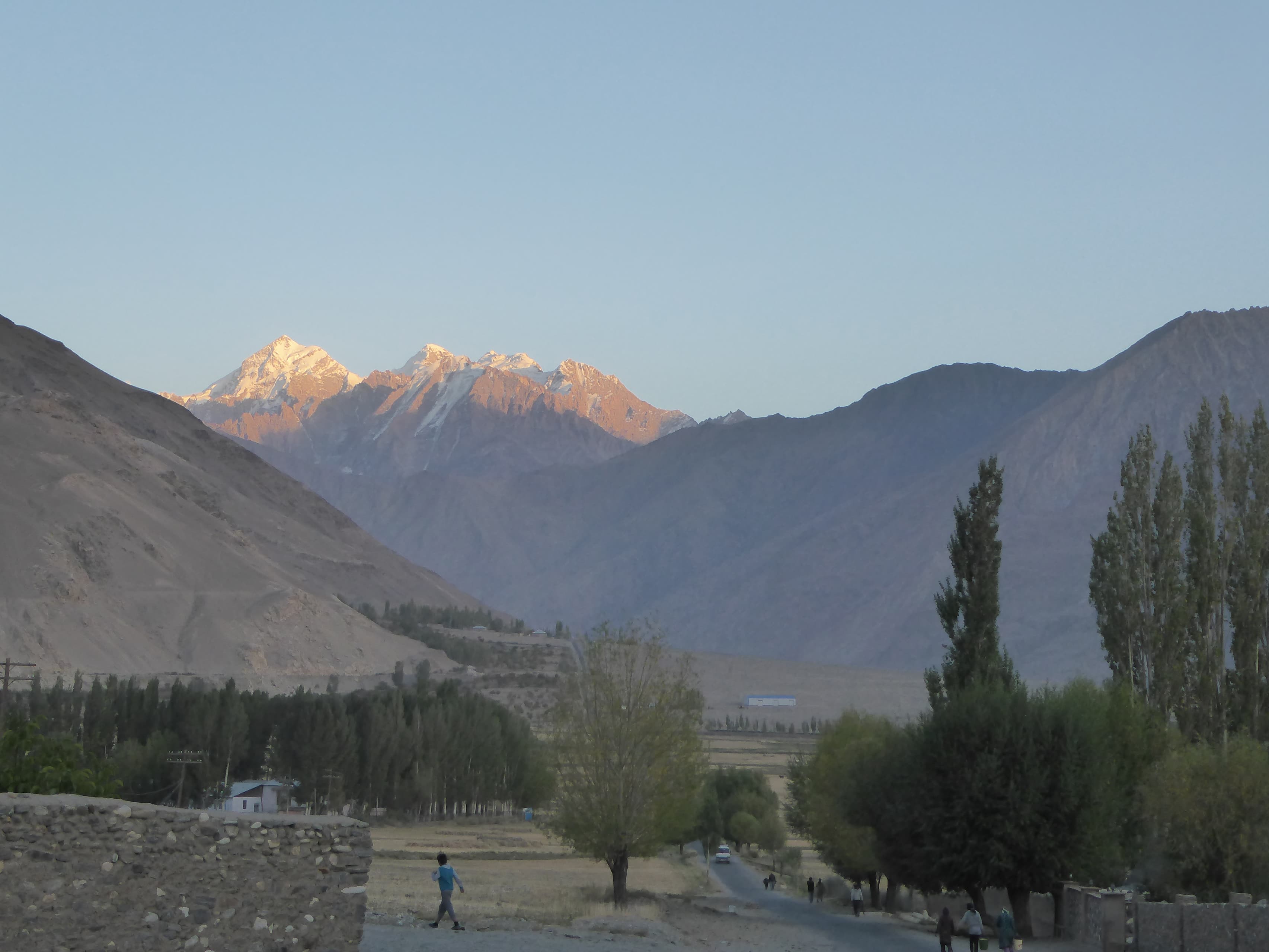
The Wakhan Valley is lower than the high Pamirs — most of it sits between 2,800 and 3,500 metres — which makes it more lush, more populated, more alive. In July, the fields beside the Panj are green. Apricot orchards line the road. The mountains rise directly from the valley floor, no foothills, no transition.
Behind you, the Great Pamir. Ahead, the Hindu Kush. The geography is disorienting in the best way.
The Wakhi people
The Wakhis are distinct from the broader Tajik and Pamiri populations. They speak Wakhi — a language unrelated to Tajik — and maintain cultural traditions that have survived centuries of isolation. Felt-making. Oral poetry. Hospitality rituals that have not changed since the time of Marco Polo, who passed through this corridor in the 13th century.
We stay with families here. Not in guesthouses — in homes, sleeping on the floor on thick felt mats, eating shorpo (lamb soup) and non (flatbread) baked that morning. Our hosts do not speak English. We do not speak Wakhi. Somehow this is never a problem.
The archaeology
The Wakhan is layered with history. Khaakha fortress, perched above the valley, dates to the first millennium CE. Buddhist stupas. Zoroastrian fire temples. The remains of caravanserais that served the Silk Road merchants who took this route to avoid the more dangerous passes to the north.
Most of these sites have never been formally excavated. They sit where they fell, accessible to anyone willing to walk an hour off the main track.
Getting there
The road from Ishkashim to Langar is rough. Four-wheel drive is essential. The border town of Ishkashim holds a joint Afghan-Tajik market every Saturday — one of the few places where people from both sides of the Panj can trade freely. We always stop.
From Langar, at the confluence of the Panj and Wakhan rivers, the track continues east into the Great Pamir. Ahead lies Zorkul lake, the Marco Polo sheep, and the roof of the world.